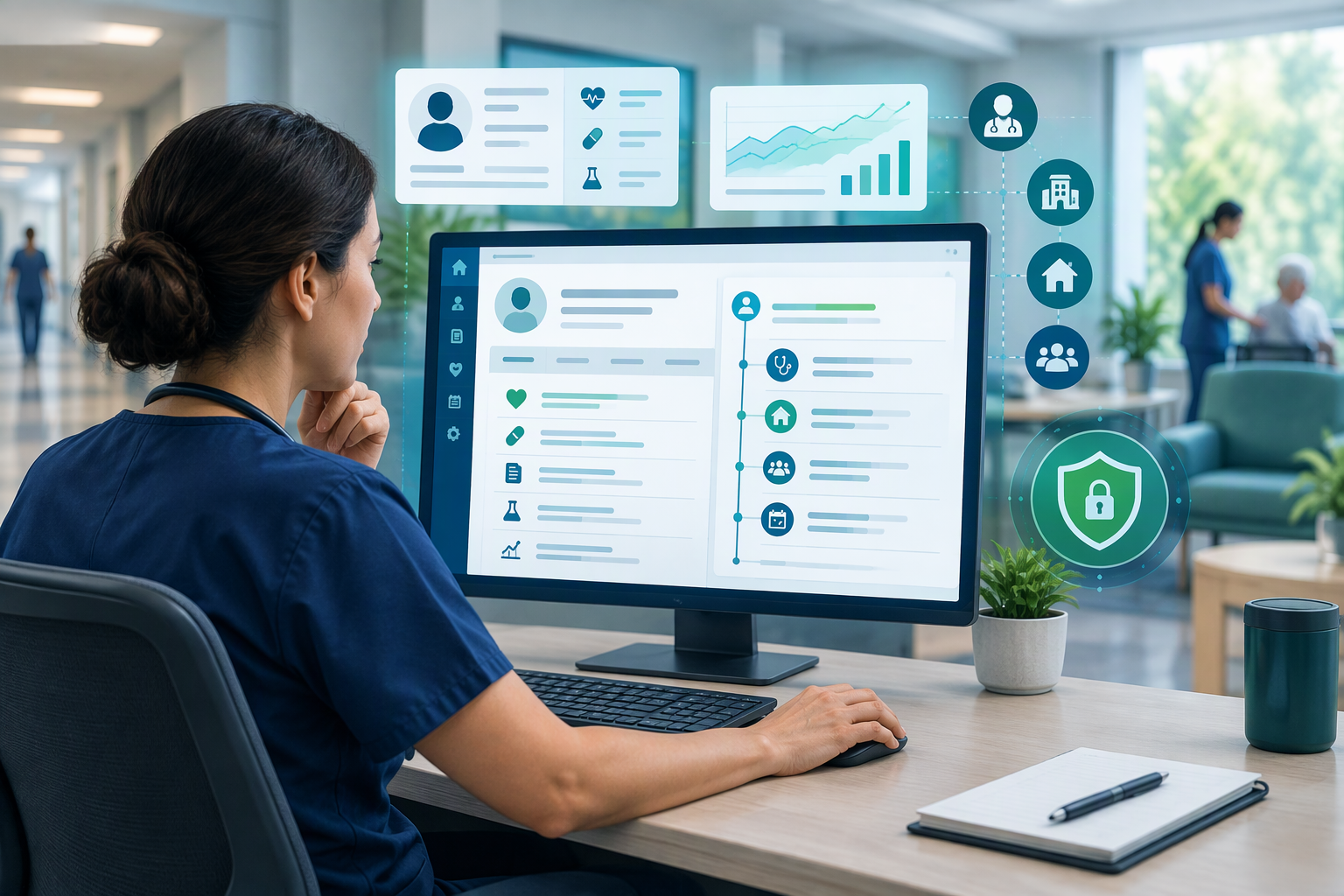
What is SigmaCare? SigmaCare is a healthcare electronic health record platform associated with MatrixCare. It is designed to help organizations manage clinical information, coordinate care, document services, and support the day-to-day work of long-term care and post-acute healthcare teams.
For students and general readers, SigmaCare is useful to understand because it shows how modern healthcare software connects patient information with clinical workflows, operational reporting, and communication. It is not simply a digital filing cabinet. An EHR platform can influence how information is recorded, shared, reviewed, and used to support decisions.
What is SigmaCare?
SigmaCare is a specialized healthcare software platform for electronic records and care management. Its role is to bring important information into a structured digital environment so authorized staff can access the records relevant to a resident or patient’s care.
Healthcare organizations often manage information from many parts of a person’s journey, including assessments, care plans, progress notes, medications, appointments, orders, and communications. A specialized EHR helps organize these details and connect them to the workflows used by nurses, administrators, clinicians, and other care professionals.
The exact tools and configuration available to an organization can depend on its care setting, subscription, integrations, implementation choices, and current product version. Readers who need current product information should consult the official MatrixCare website.
Why healthcare organizations use specialized EHR software
General business software is rarely designed for the complexity of healthcare documentation. Care organizations need systems that can handle sensitive information, repeated assessments, structured clinical records, regulatory requirements, and collaboration between different roles.
A specialized platform such as SigmaCare can help create a common information environment. Instead of relying on disconnected paper files, spreadsheets, emails, and separate notes, authorized users can work from records that follow consistent structures and permissions.
This does not remove the need for professional judgment. Technology supports the process, but care decisions remain the responsibility of qualified healthcare professionals and the organization’s policies.
Key SigmaCare features
Electronic health records
The central function of an EHR is to store and organize health information electronically. Staff may use digital records to review a person’s history, document observations, record interventions, and follow changes over time.
Structured records can improve consistency because users are guided toward the fields and information needed for a particular workflow. They can also make it easier for authorized team members to locate information without searching through multiple paper documents.
Care planning and documentation
Long-term and post-acute care often involves ongoing plans rather than a single appointment. Care planning tools help teams record goals, needs, services, observations, and progress in a more organized way.
Good documentation should reflect the person’s actual situation. Software can provide templates and reminders, but staff still need to enter accurate information and review records carefully.
Clinical workflow support
Healthcare EHR platforms can connect documentation with daily clinical activities. Depending on the implementation, teams may use the system for assessments, progress notes, task management, orders, medication-related documentation, and communication between departments.
The purpose of workflow support is to reduce unnecessary duplication and make important information easier to review. It should not encourage staff to treat a template as a substitute for observation or professional reasoning.
Reporting and operational visibility
Administrators need more than individual records. They also need a broader view of documentation status, service delivery, staffing workflows, quality processes, and operational activity.
Reporting features can help an organization identify incomplete documentation, monitor recurring processes, and prepare information for internal review. The usefulness of a report depends on the quality of the underlying data and the way the organization interprets it.
Communication and coordination
Residents and patients may receive care from nurses, physicians, aides, therapists, administrators, and external providers. A shared digital record can support coordination by giving authorized users access to relevant updates.
Better coordination may reduce the risk of information being isolated in one department. However, access should always follow privacy rules, role-based permissions, and the organization’s security procedures.
How SigmaCare can support long-term care
Long-term care organizations manage continuing needs rather than short episodes of treatment. Staff may need to track changes in health, ongoing care plans, regular observations, medication-related information, and communication with families or external providers.
A specialized EHR can help organize these recurring processes. It may make it easier to follow a resident’s record over time, connect observations with care planning, and provide a shared reference for authorized members of the care team.
The value of the platform depends on implementation. Staff training, clear policies, reliable data entry, appropriate permissions, and regular review are just as important as the software itself.
Potential benefits of SigmaCare
- Centralized information: Important records can be organized in one digital environment.
- More consistent documentation: Structured workflows can help teams follow standard recording processes.
- Improved coordination: Authorized users can review relevant updates across care roles.
- Operational reporting: Administrators can use reports to review activities and identify gaps.
- Reduced dependence on paper: Digital records can make searching, updating, and sharing information more efficient.
- Support for continuity of care: A longer-term record can help teams understand changes and ongoing needs.
These are potential benefits, not automatic results. A successful deployment requires appropriate configuration, staff adoption, data governance, and ongoing support.
Important limitations and implementation considerations
Choosing an EHR is a major organizational decision. Healthcare leaders should evaluate the platform against their actual care setting, workflows, staffing model, reporting needs, integrations, and security requirements.
Implementation can require data preparation, workflow mapping, user training, testing, access-control design, and change management. A platform may offer many features, but unused or poorly configured features do not create value on their own.
Organizations should also consider how the system connects with other tools. Interoperability, data export, identity management, backups, audit records, and vendor support can be important parts of the evaluation.
Is SigmaCare suitable for every healthcare organization?
No single EHR is automatically suitable for every organization. SigmaCare may be especially relevant to organizations that need structured support for long-term care, senior care, or post-acute workflows, but decision-makers should compare its capabilities with their own requirements.
Before selecting a platform, an organization can document its most important processes and ask practical questions:
- Which clinical and administrative workflows must the system support?
- Which staff members will use it, and what access should each role have?
- What data must be migrated or integrated?
- Which reports are required for operations, quality, or compliance?
- What training and implementation resources are available?
- How will privacy, security, backups, and account management be handled?
SigmaCare and MatrixCare
SigmaCare is associated with MatrixCare, a healthcare technology provider serving long-term care and post-acute care organizations. Product names, ownership details, available modules, and service descriptions can change, so readers should confirm current information through official vendor materials rather than relying on older articles or screenshots.
This distinction matters for students and general readers researching healthcare software. A product’s historical name, current brand, and available features may not always be identical. Checking the current vendor information helps separate older references from the platform’s present-day offering.
Frequently asked questions
What is SigmaCare used for?
SigmaCare is used for healthcare electronic records, care documentation, workflow support, communication, and reporting. Its exact use depends on the organization’s care setting and configuration.
Is SigmaCare an EHR?
Yes. SigmaCare is associated with electronic health record and care-management functions for healthcare organizations, particularly in long-term and post-acute care environments.
Who uses SigmaCare?
Potential users include healthcare administrators, nurses, clinicians, care staff, and other authorized professionals whose work requires access to structured resident or patient information.
Is SigmaCare suitable for small organizations?
Suitability depends on the organization’s workflows, budget, staffing, implementation capacity, and reporting requirements. A formal evaluation is better than assuming that one platform fits every organization.
Does SigmaCare replace healthcare professionals?
No. EHR software organizes information and supports workflows, but assessment, treatment, care decisions, and professional responsibility remain with qualified healthcare professionals.
Conclusion
SigmaCare illustrates how healthcare EHR platforms can connect clinical documentation, care planning, communication, and operational reporting. For long-term care and post-acute organizations, the central value of a specialized system is not simply storing information. It is helping authorized teams work from clearer, more consistent, and more connected records.
At the same time, software is only one part of a successful healthcare information strategy. Implementation quality, staff training, privacy controls, accurate documentation, and continuous review all influence the result.
For more technology and digital business insights, visit the Tech Nox homepage.